
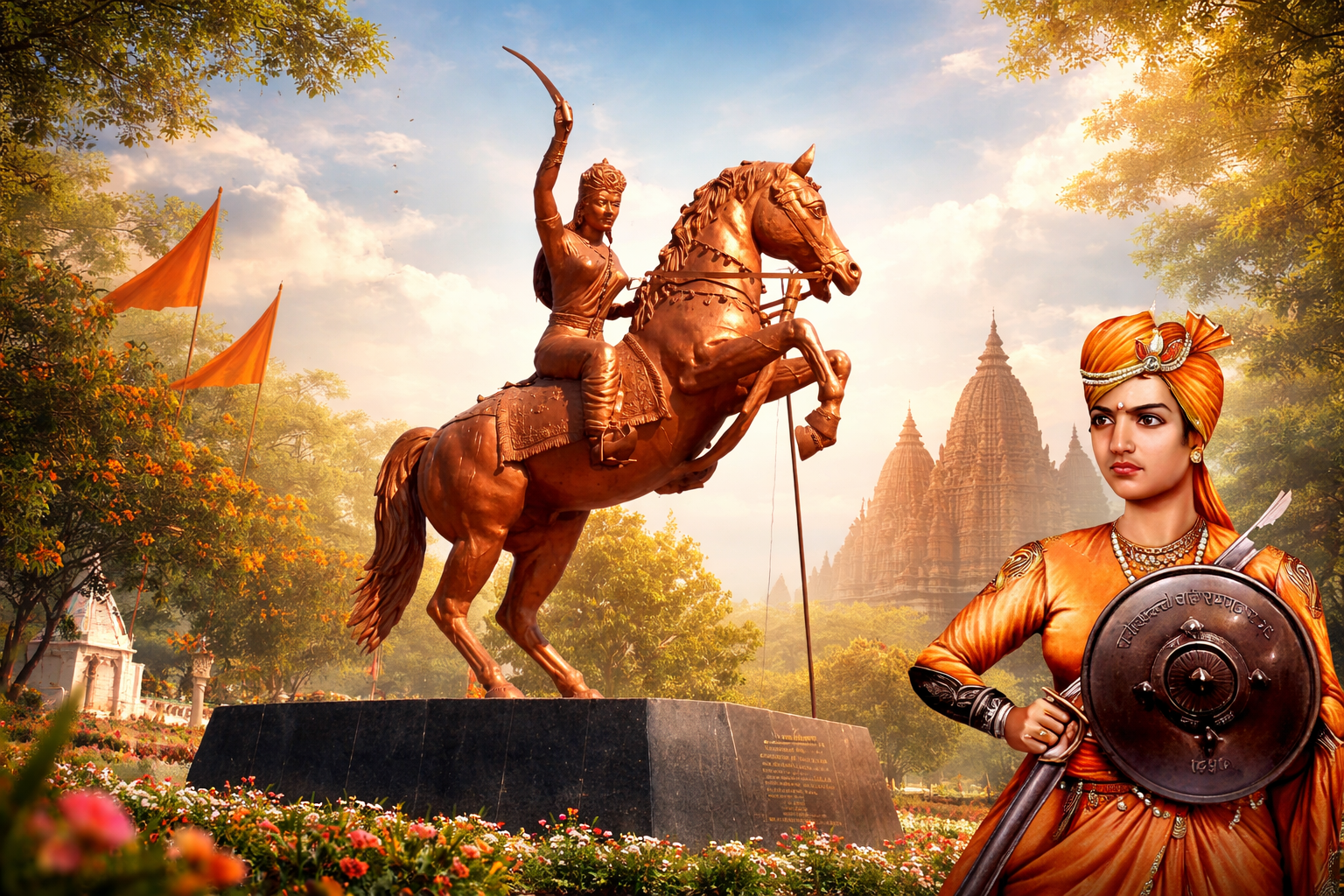
New Delhi (Correspondent) – Union Home and Cooperation Minister Amit Shah paid heartfelt tribute to Veerangana Rani Avantibai Lodhi on her martyrdom day on Friday. In a post on social media platform X, Home Minister Amit Shah said, “The life of Veerangana Rani Avantibai Lodhi is a unique example of courage, sacrifice, and patriotism. During the 1857 struggle, she stood firm against the British and chose martyrdom over surrender. Her sacrifice is an immortal message of dedication and pride for the nation. Salutations on her martyrdom day.”
Who Was Rani Avantibai Lodhi
Rani Avantibai Lodhi was a unique national martyr and warrior woman of India’s first independence struggle in 1857, who set an immortal example of feminine valor by standing against British rule. She was born on August 16, 1831, in the village of Mankehni (Mankadi) in Seoni district, Madhya Pradesh. Her father, Rao Jujhar Singh, was a respected zamindar, and she was the beloved daughter of her mother, Krishna Bai. From childhood, she was instilled with bravery, courage, and valor; she trained in sword fighting and horse riding early on, developing warrior traits within herself.
Her marriage was to Yuvaraj Vikramaditya Singh of Ramgarh, son of Raja Lakshman Singh. After Raja Lakshman Singh’s death, Vikramaditya Singh became the king of Ramgarh, but due to his weak health, Rani Avantibai practically took over the state’s administration.
Rebellion Against British Rule
Rani had two sons, Aman Singh and Sher Singh, who were to be the rightful heirs to the state in the future. However, Governor-General Lord Dalhousie’s ‘Doctrine of Lapse’ shook not only large states but also small principalities. Ramgarh too fell victim to this policy. Declaring the ailing Vikramaditya Singh “unfit” and their two sons minors, the state was taken over by the Court of Wards under British control, and British officers were appointed there.
Rani Avantibai considered this unjust and took a historic step by expelling the British-appointed officers from Ramgarh and taking the state’s governance into her own hands. She ordered farmers not to follow the British tax directives and awakened the public against the atrocities planned under the guise of tax collection. This decision rapidly increased her popularity among rural people, making her renowned as a reliable and just ruler not only in Ramgarh but across the surrounding areas.

First Female Martyr
Many historians believe Rani Avantibai Lodhi was the first female self-sacrificing martyr in the 1857 independence struggle, giving a new dimension of womanhood to the national movement. Institutions like Rani Avantibai Lodhi University (RAB College) in Madhya Pradesh are named in her honor, symbolizing education and upliftment for tribal and backward classes.
Historic Role in 1857 Independence Struggle
In the first war of independence in 1857, Rani Avantibai accomplished the historic task of uniting small states and zamindars. She cleared British administration from areas like Gujri, Ramanagar, and Bichia with her allies and even decided to attack Mandla. Rani sent a letter and a packet of two black bangles to kings, zamindars, and malguzars. Her message in the letter was: “Prepare for battle against the British, or wear these bangles and stay home.” This appeal not only united the defender class but also laid the foundation for a broad public movement as a freedom army.
On November 23, 1857, in the famous battle of Khairi (Ghughri), Rani’s organized army defeated the British force of Mandla’s Deputy Commissioner Waddington, showcasing remarkable leadership and combat skills. Despite having limited and sudden strength compared to the British army, Rani’s forces transformed the battlefield.
Martyrdom and Final Statement
The British continued relentless attacks to avenge their defeat, but Rani’s resolve and bravery did not waver. On March 20, 1858, in the battlefield of Devharigadh (Devhargadh), the British army launched a deadly assault on her. When Rani saw she was surrounded and capture by the British was inevitable, she performed self-sacrifice with her own sword. In this way, she immortalized the message of ‘self-respect, courage, valor, freedom, and love for the motherland’ right on the battlefield.
